
Calvary Hospital’s Inaugural Flynn Fellows Explore Critical Questions in End-of-Life Care
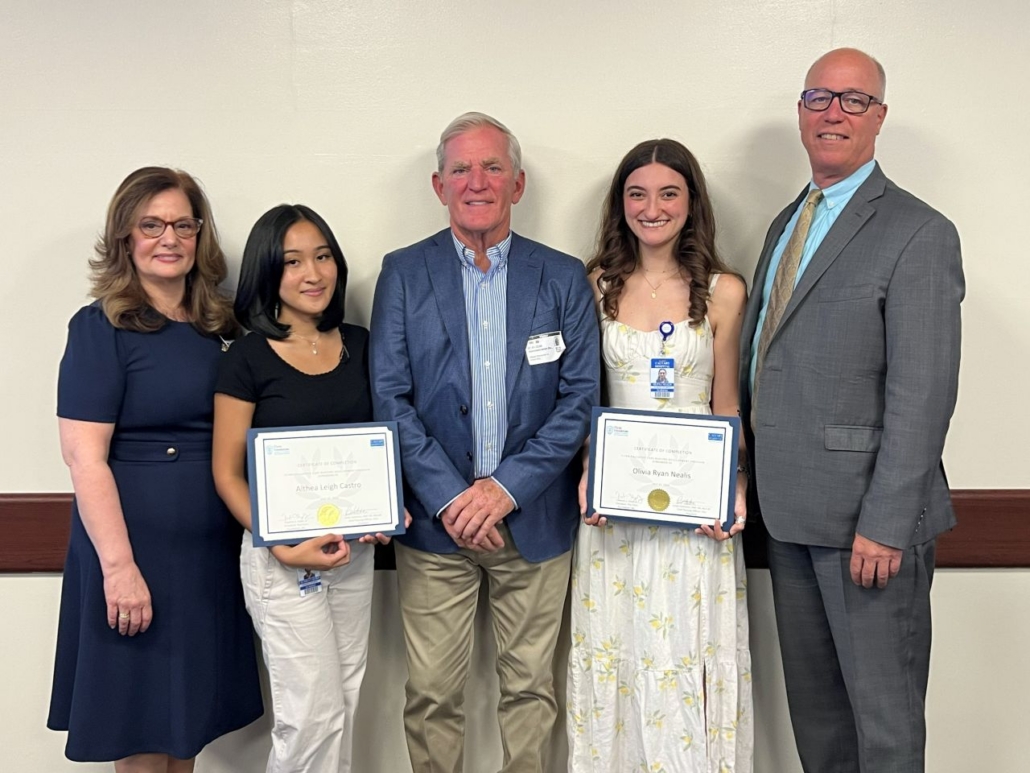
Pictured above from left: Dr. Linda Valentino, Calvary Hospital Chief Nursing Officer; Flynn Fellow Althea Leigh Castro; Frederick C. Flynn Jr., Founder and President of the Flynn Foundation; Flynn Fellow Olivia Nealis; and Calvary Hospital President Michael Fosina at the July 31 graduation ceremony at Calvary Hospital.
Summer fellowship gives rising senior nursing students uncommon access to supervised clinical practice, research and mentorship
BRONX, N.Y., AUGUST 7, 2026 — Calvary Hospital recognized its first participants in the Susan Flynn Palliative Care Nursing Fellowship program on July 31, marking the completion of an intensive summer experience in palliative and end-of-life nursing care.
The fellows, Althea Castro of Hunter-Bellevue College (CUNY) and Olivia Nealis of Catholic University of America, worked alongside Calvary nurses and interdisciplinary care teams while developing evidence-based practice projects grounded in their interactions with patients and families.
Castro studied advance care planning with patients and families, a process that helps people clarify their values, treatment preferences and goals as serious illness progresses. Nealis examined barriers to pain management and the role of nurse-led patient education, including how communication and understanding can affect a patient’s comfort and willingness to report symptoms.
Both subjects are central to end-of-life care, where clinical decisions often depend on trust, communication and a clear understanding of patients’ needs and preferences.
Castro said the fellowship transformed advance care planning from an academic concept into a deeply human responsibility shaped by listening to patients and families.
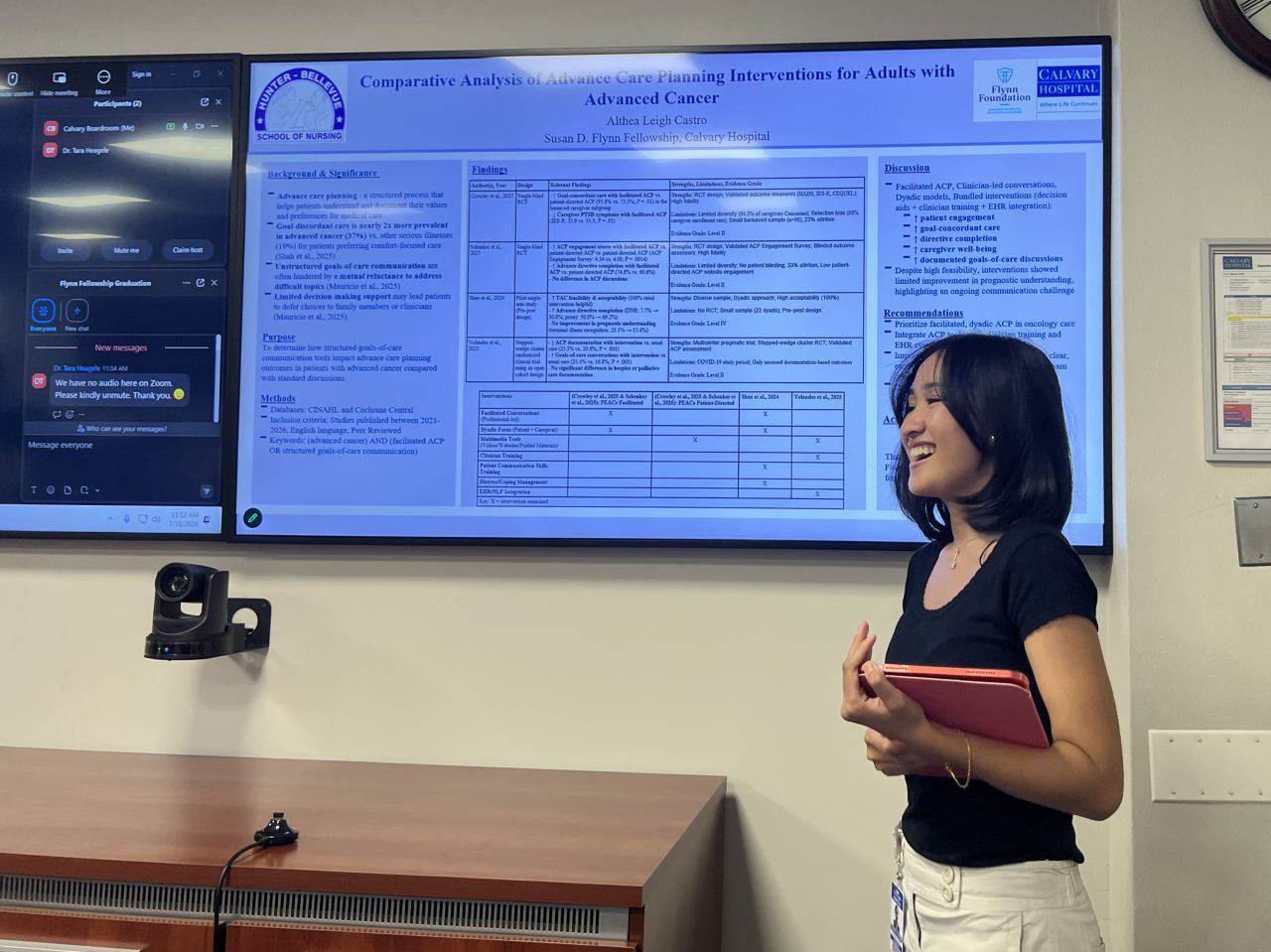
Althea Castro
“I expected to learn about palliative care, but I did not anticipate how deeply I would be involved in the clinical and emotional dimensions of caring for patients and families,” Castro said.
Nealis said her work with patients revealed that effective pain management depends not only on clinical treatment, but also on education, trust and a patient’s confidence in communicating symptoms.
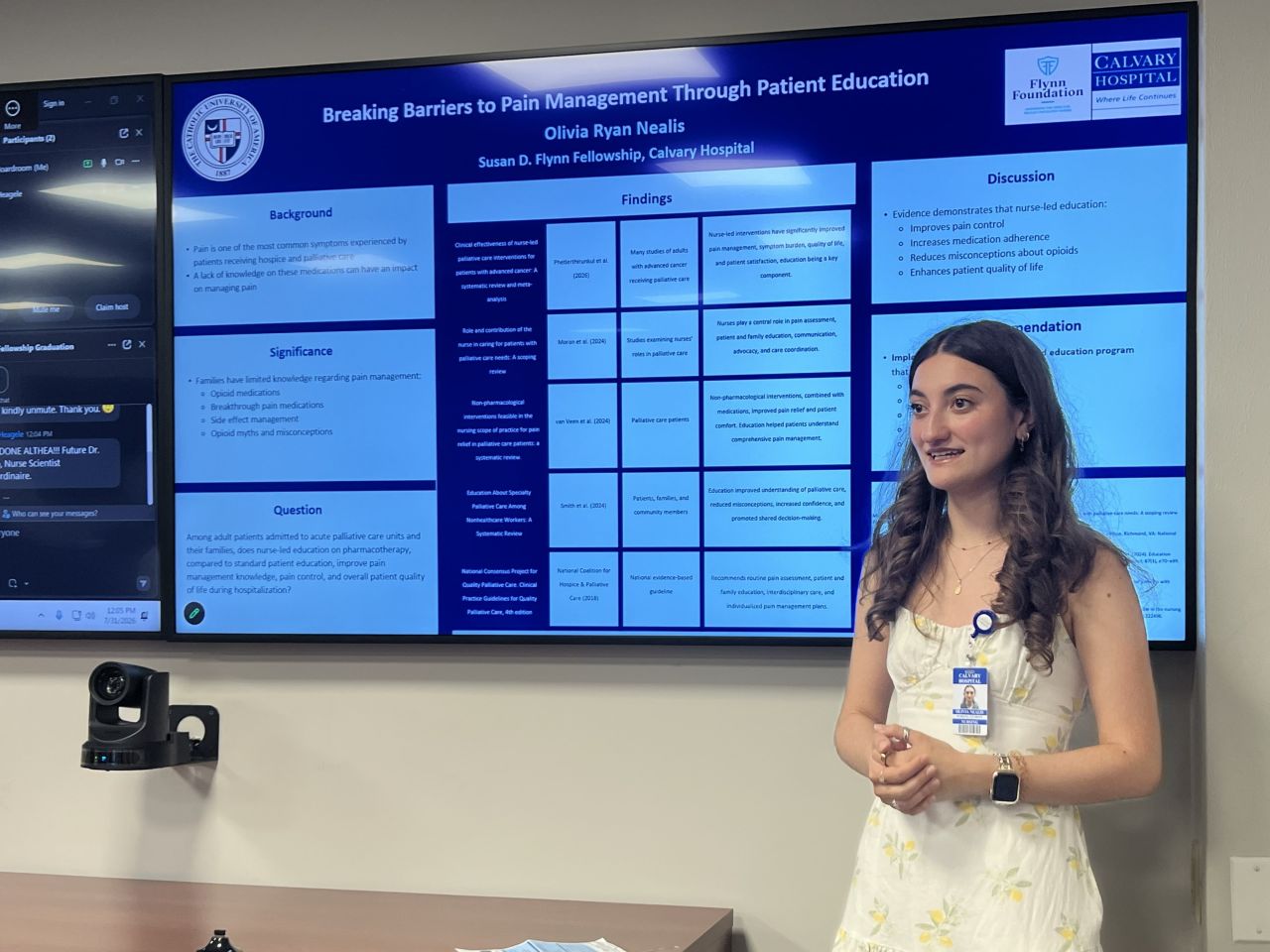
Olivia Nealis
“Working directly with patients and observing Calvary nurses helped me understand that effective pain management involves far more than medication alone. It requires communication, trust and making sure patients feel comfortable about expressing their concerns,” Nealis said.
“These were not topics selected in isolation from clinical practice,” said Linda Valentino, DNP, RN, NEA-BC, Chief Nursing Officer, Vice President, Calvary Hospital.
“Althea and Olivia developed their research questions through direct, supervised interactions with patients and families. That connection between bedside experience, academic inquiry, and clinical relevance is unusual for students entering their senior year,” added Dr. Valentino.
Nursing students rarely receive such sustained exposure to patients before college graduation, according to Dr. Valentino.
“Providing that experience requires expert supervision, thoughtful mentorship and the participation of an entire interdisciplinary team. This reflects Calvary’s commitment to developing the next generation of clinicians while protecting the dignity, privacy and needs of every patient and family,” she said.
The Flynn Fellowship is intended to strengthen the nursing workforce by introducing students to specialized clinical practice before they enter the profession. Fellows receive mentorship, participate in patient care under supervision and learn how nurses collaborate with physicians, social workers, chaplains and other specialists.
“The Calvary fellowship demonstrates what this program was created to achieve,” said Frederick C. Flynn Jr., Founder and President of the Flynn Foundation, who attended the ceremony in The Bronx.
“Talented nursing students were given the opportunity to learn from experienced clinicians, contribute to evidence-based practice and develop a deeper understanding of what patients and families face during serious illness. That
combination of mentorship, clinical exposure and academic work can shape the direction of a young nurse’s career,” said Flynn.
Calvary hosted two of the 48 students in the 2026 Flynn Fellows cohort, which placed fellows at 14 hospitals across the Northeast. For Calvary, the program is also part of a broader effort to expand its role in professional education and build partnerships with universities, nonprofit organizations and community institutions.
“Healthcare workforce development depends on strong partnerships between clinical organizations, academic institutions and the communities they serve,” said Michael Fosina, President of Calvary Hospital.
“No single institution can prepare the future workforce alone. The Flynn Fellowship allows students to connect academic learning with the realities of patient care while providing experienced professionals a meaningful role as teachers and mentors.”
Fosina said Calvary’s educational mission is becoming increasingly important as healthcare systems confront workforce shortages and growing demand for clinicians trained in serious illness care.
Across the first half of 2026, Calvary’s non-medical student rotation program drew more than 100 students from several highly regarded academic institutions, including Yale, NYU, Columbia, Yeshiva, Emory, Drexel, Iona, and other universities. Their disciplines ranged from palliative care nursing, public health, and social work to health information management, health care administration, bereavement, and interprofessional education.
“Calvary has long been recognized for its care of patients and families at the end of life,” he said. “We also have a responsibility to share that expertise. By expanding our work with nursing students, universities and community partners, Calvary can help prepare clinicians who understand that excellent care requires technical knowledge, communication, compassion and respect for each patient’s goals.”
Castro and Nealis, now join the broader Flynn Fellows community as they complete their nursing education.
About the Flynn Foundation, Inc.
The Flynn Foundation is a nonprofit organization dedicated to developing the next generation of oncology nursing leaders through education, mentorship, and professional development. Its mission is to help address the critical shortage of palliative care and oncology nurses while enhancing the future quality of care for cancer patients and their families. The Fellowship program provides aspiring nurses with the clinical experience, mentorship, and support needed to launch successful careers in this vital specialties.
About Calvary
Calvary, the world leader in providing expert medical care for people living with palliative care needs or requiring end-of-life care, has served Greater New York since 1899. Calvary Hospital and Calvary Hospice care for approximately 6,000 mostly terminally ill patients (and their families) annually through a wide range of medical interventions and support services. Visit www.calvaryhospital.org to learn more.
Photo caption: From left: Dr. Linda Valentino, Calvary Hospital Chief Nursing Officer; Flynn Fellow Althea Leigh Castro; Frederick C. Flynn Jr., Founder and President of the Flynn Foundation; Flynn Fellow Olivia Nealis; and Calvary Hospital President Michael Fosina at the July 31 graduation ceremony at Calvary Hospital
